Foreign tanks began arriving in the USSR in October of 1941 and reached the front lines a few weeks after. Were these tanks pivotal to saving Moscow from the Germans? Find out in my latest video.

This blog is dedicated to bringing World War II era documents to the general public, with an overall focus on armoured warfare. Questions? Requests? Comments? Email me at tankarchives@gmail.com or find me on Twitter @Tank_Archives.
Friday, 1 December 2023

Friday, 24 November 2023
African Pz.Kpfw.III
The heavy Panthers and Tigers are the best known of Germany's tanks. The lion's share of discussions of armoured vehicles in the Second World War is dedicated to them, even though lighter tanks carried the Panzerwaffe through the majority of the war. The Pz.Kpfw.III tank proved itself to be a worthy opponent in the first half of the war. At the same time, it remained a mystery for the British for a number of years until the first trophies began arriving from North Africa in 1941-42. This is what the British learned from these studies.
Third time's the charm
The Pz.Kpfw.III medium tank was posed as Germany's main tank from the early days of the Nazis' reign, but development was slow. Only 120 tanks were in the field by the start of the Second World War and 381 by the beginning of the Battle of France. Serious losses among them prove that they were actively used and the British Expeditionary Force couldn't have avoided meeting them on the battlefield. However, even if a tank of this type was captured there was no opportunity to study it or send it back to Britain. The speed of the German offensive forced the British to abandon even their own tanks on the continent.
 |
| A column of Pz.Kpfw.III tanks in France prepares to move out. The British did not gather any detailed information on these vehicles in 1940. |
Monday, 6 November 2023
IS-2 in Combat
"To the Commander of Artillery of the 5th Guards Tank Army
In carrying out your order, I present materials on experience of using IS-122 heavy tanks.
- During fording of water obstacles.
- Use of concentrated volley fire of IS-122 tanks (company and regiment).
- Examples of use of IS-122 heavy tanks in offensive combat.
1. IS-122 heavy tanks serve as support for medium tanks. During crossings, they support the medium tanks with their fire and cross the water after them.
Sunday, 29 October 2023
Video: Can an IS-2 hit a target at long range?
The IS-2's can penetrate the Panther's armour at effectively any range, but can it hit? In my latest video, I take a look at the theoretical and practical precision of the IS-2's 122 mm D-25T gun to see if it could hit a Panther-sized target at long ranges.
Tuesday, 24 October 2023
Roof for the SU-76M
A number of questionable publications on the SU-76 created the idea that the SU-12 (SU-76) initially had a roof over the fighting compartment, but it was later removed, never to return. This is far from the truth. The SU-12 prototype and a large number of production vehicles had no roof initially. Stalin personally demanded that a roof be installed on every vehicle starting with the first one, but this was only put into practice in the second half of March 1943. The claim that roofs were removed on the front lines is not supported by photographic evidence. Vehicles without roofs always have their headlights and other stowage in different positions, same as the prototype. The roof was also present on the SU-15 prototype, although the improved SU-15M (SU-76M) didn't have it.
 |
| SU-76M with a rigid roof developed at factory #40 in the summer of 1944. |
Friday, 6 October 2023
Americans in Africa
The trials of the American Medium Tank M3 in Great Britain gave mixed results. On one hand, the tank had no shortage of design defects. On the other hand, there was nothing else to choose from. The Americans refused to build British tanks under license and Britain's own factories could not meet its army's needs. However, British tanks were far from perfect themselves, and the American tank still had tough armour and a powerful 75 mm gun that outperformed both the British 2-pounder and 3" howitzer. As a result, the American tanks were sent to Africa to prove themselves in battle.
Eye of the hurricane
The North African front stood still after the British retreated to Gazala in February of 1942. This pause allowed to train crews for the new tanks. Small number of Grant tanks began arriving in North Africa back in late 1941, but now shipments really picked up. 666 vehicles of this type were in theater by the end of March.
 |
| An American instructor demonstrates the new tanks to British tankers. |
Monday, 25 September 2023
Two Tanks In One
A story of what a Main Battle Tank is and how it came to be.
Tanks evolved considerably over the course of over 100 years of service. The first tanks were built to break through enemy fortifications, but still ended up being much smaller than the landships that H.G. Wells dreamed of. Nevertheless, the effect they had was considerable. All armies of the world wanted to have their own tanks, but not all managed to create one. A tank only seems simple, but in reality is quite a complicated fighting machine that requires a powerful industry to produce. Far fewer nations managed to build their own tanks than their own aircraft. In addition, like any weapon individual tanks quickly became obsolete. It is only in the last few decades that tank development slowed down from its breakneck pace. Tanks remain one of the key types of vehicles on the battlefield. There have been many attempts to write them off as a relic of the past, but practice shows that this time has not yet come.
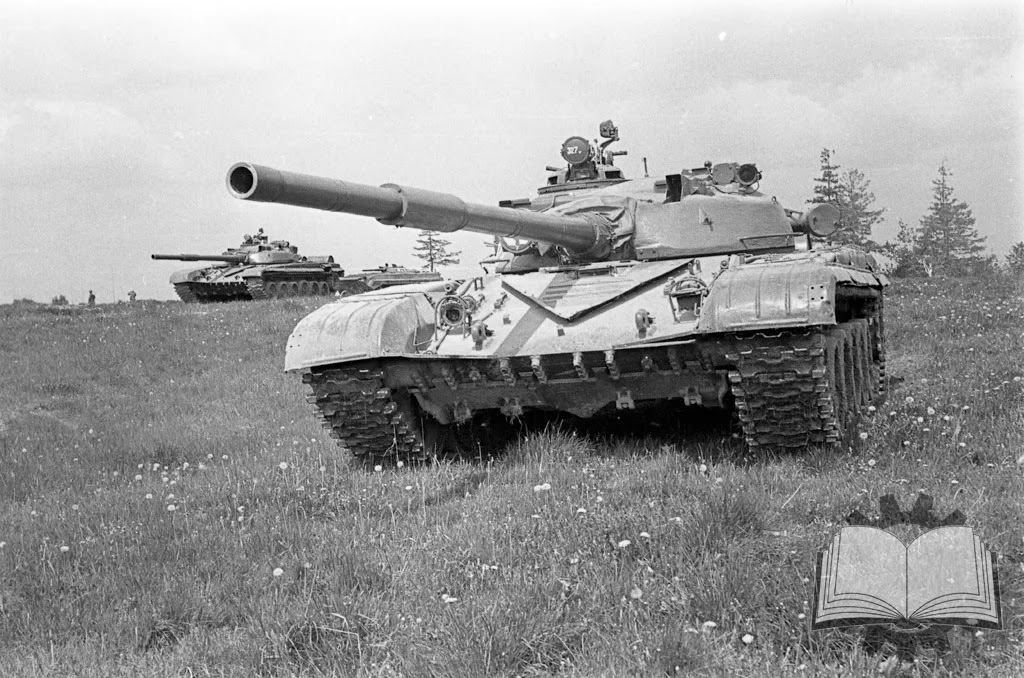 |
| T-72, the most numerous Main Battle Tank. These tanks were developed in the late 1960s but continue to serve and will do so for decades to come. |
Tuesday, 19 September 2023
Smokescreens in the 31st Tank Corps
"Report on the use of smokescreen by the 31st Tank Corps in January of 1945
A. Preparation of tank and SPG crews to use neutral smokescreens in battle
Strong attention to the use of smokescreens was paid during training of all types of forces in the corps. Personnel of tanks, SPGs, and motorized rifle units was taught the rules of using smoke equipment and its tactical-technical data.
The following topics were practices during tactical training exercises held in November-December 1944:
- The use of the RDG and DSh smoke bombs by a single tank or SPG to conceal its maneuver in combat.
- The use of smoke launchers by infantry and tanks to signal aircraft.
- Deployment of a tank battalion under the cover of a smokescreen set by an advance force.
- Attack by a tank battalion through a corridor in the smokescreen created by MDSh bombs lit by flanking tanks as cover from anti-tank gun fire.
- Concealing anti-tank obstacles in front of a defending rifle battalion with smoke to make crossing them more difficult.
Monday, 18 September 2023
Copper Horns
The need for communications equipment in armoured vehicles became clear soon after their creation. Semaphores and signal flags were just a half measure. It was necessary to equip tanks with radios, but the road to equipping even a part of them was a long one. The modern system with a radio in the turret and a whip antenna was also far from the initial norm. There were many alternative visions of how a tank radio antenna should look.
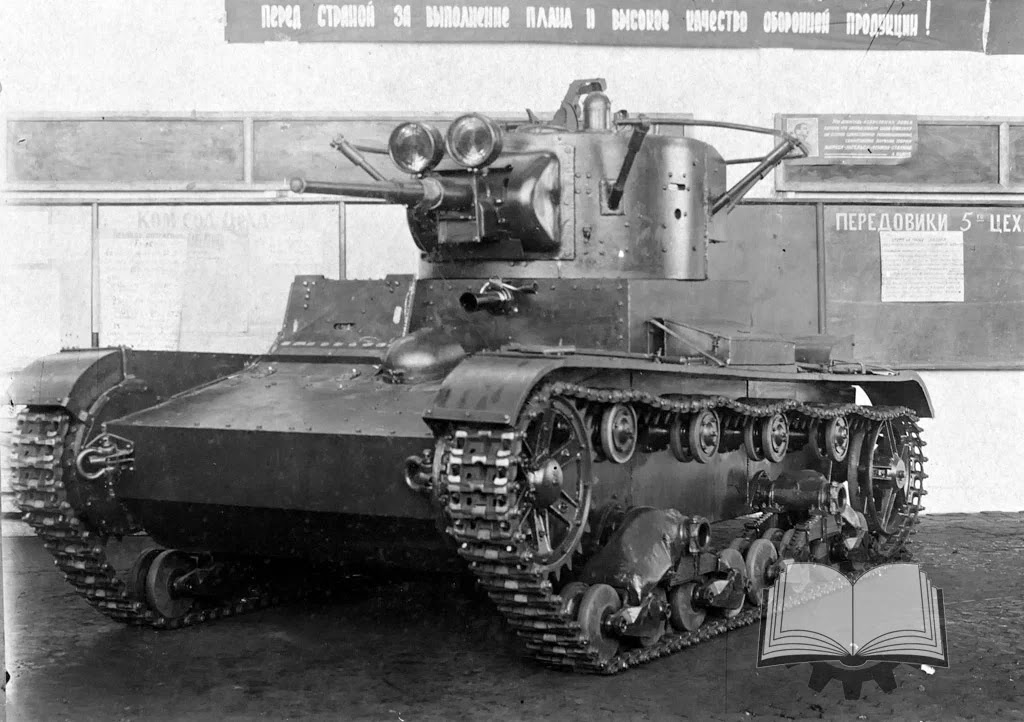 |
| The rail antenna was a characteristic feature of Soviet tanks in the 1930s. |
Rail antennas became one of the characteristic features of Soviet tanks in the interwar years. "Horns" around the turret became a calling card of this generation of tanks. Few people stop to consider where such a strange antenna came from and how it works, especially since their age was brief. They were no longer used by Soviet industry after 1939, as opposed to the nation that came up with them originally.
Monday, 11 September 2023
Italian Cruiser Tank
Italian tank building developed along a fairly usual trajectory. Once a direction was identified, the Italian military tried to stay on course. Under their close guidance, Ansaldo developed a series of combat vehicles: first a tankette, then a light tank, a medium one, and a breakthrough tank. In almost all cases, success was based on a foreign idea, primarily the British one. At first the Italians further developed the idea of the Carden-Loyd Mk.VI tankette and then the Vickers Mk.E support tank.
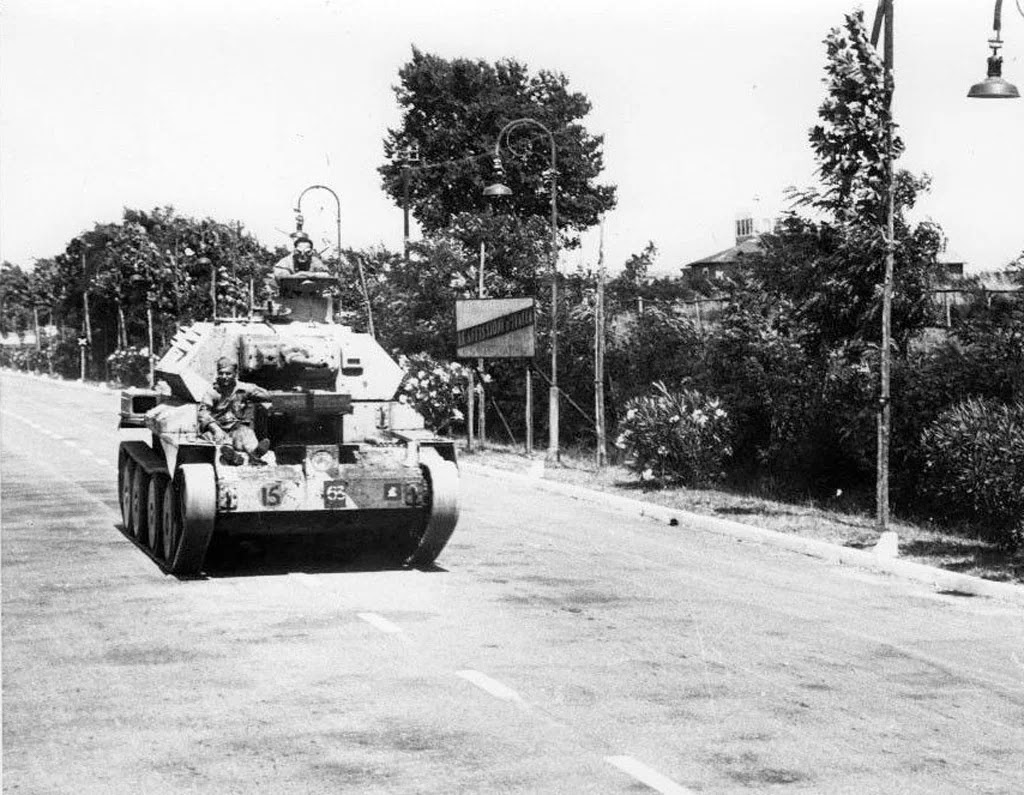 |
| Captured Cruiser Tank Mk.IVA at trials in Nettuno. This tank was the inspiration for a "colonial" tank. |
Combat in North Africa revealed a series of deficiencies, including insufficient characteristics of Italian medium tanks. One of the biggest issues was their low mobility. The increase in engine power was not an accident. British vehicles were studied in parallel. A Cruiser Tank Mk.IVA was among those examined. This was not the most successful tank, but it was fast. A captured tank was tested at Nettuno in May of 1941. The idea of creating an Italian cruiser tank came about around the same tank. This tank was later called Carro M Celere Sahariano.
Subscribe to:
Posts (Atom)