The IS-2's can penetrate the Panther's armour at effectively any range, but can it hit? In my latest video, I take a look at the theoretical and practical precision of the IS-2's 122 mm D-25T gun to see if it could hit a Panther-sized target at long ranges.

This blog is dedicated to bringing World War II era documents to the general public, with an overall focus on armoured warfare. Questions? Requests? Comments? Email me at tankarchives@gmail.com or find me on Twitter @Tank_Archives.
Showing posts with label accuracy. Show all posts
Showing posts with label accuracy. Show all posts
Sunday, 29 October 2023

Wednesday, 19 April 2023
45 mm APCR Penetration
"To the Chair of the State Committee of Defense, comrade I.V. Stalin
We present the main results of proving grounds trials of 45 mm subcaliber armour piercing shot designed by Military Engineer 1st Class comrade Burmistrov.
The shot with heavy and hard tungsten alloy shows the best results. This shot satisfies the requirement of penetrating at least 60 mm of armour with the resistance coefficient of at least 2400 at an angle of 30 degrees at a range of 300-500 meters. They considerably increase the power of the 45 mm model 1932/37 anti-tank gun.
Monday, 27 February 2023
Modernization in the British Style
Great Britain, the nation that was first to invent the tank, lost its first place in tank building by the end of WWII. Nevertheless, the British designed the 17-pounder, a first class tank gun, and put it to good use on a number of vehicles, both domestic and imported ones. The most famous such vehicle was the Sherman Firefly.
Chassis for a big gun
The main British tank gun at the start of WWII was the 40 mm 2-pounder. This gun was enough against German light and medium tanks at first, but enemy tanks encountered in North Africa already had thicker armour. At first, extra protection came from applique armour that would fall off after 1-2 hits, but soon tanks with 50 mm of monolithic armour appeared that could only be penetrated at point-blank range.
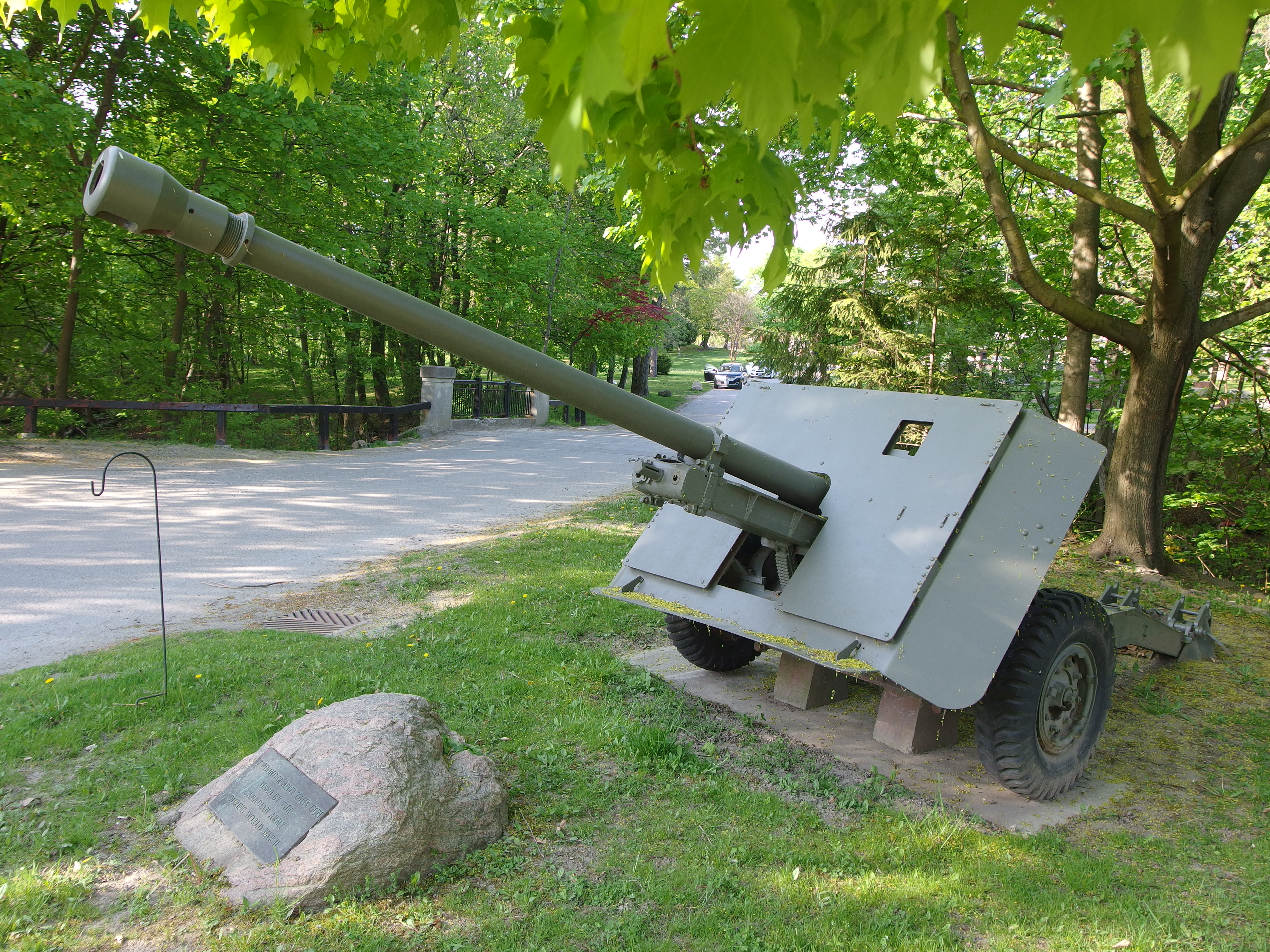 |
| 17-pounder gun, The 17-pounder anti-tank gun was a powerful weapon, but vulnerable on the battlefield due to its size and weight. The muzzle brake on this gun is not original. |
The need for more powerful tank guns was discussed as early as the summer of 1941. Arrivals of Lee and Grant tanks with the 75 mm M2 gun helped, but not for long. The American gun was deemed to be an acceptable interim measure until the arrival of sufficient quantities of towed 57 mm 6-pounder and 76 mm 17-pounder guns. The 6-pounder was small enough to fit into a tank turret, but the 17-pounder was far too large.
Monday, 20 February 2023
Tiger, Tiger, Burning Bright
The British first encountered the Tiger tank on the battlefield towards the end of 1942 in Tunisia. Employment of Tigers in early 1943 resulted in a number of losses. The Germans were fairly diligent about demolishing tanks that could not be recovered, but an intact sample was found for study before too long. This vehicle and many others were studied thoroughly by British experts in order to build a complete picture of the first German heavy tank.
Man on the inside
As with the Panther, the captured Tiger tank was used for crew comfort trials. Preliminary information about crew comfort obtained during brief inspection in Tunisia was confirmed.
The commander’s workspace was tested first. The massive gun breech made his station quite cramped. From the right the recoil guard constrained his movements in every position, from the left his space was limited by either the turret traverse mechanism (in the lower and standing positions) or the turret wall (in the upper position). His seat lacked a back, and shocks during travel threw him against the hard gas mask rack. The commander had an auxiliary turret traverse flywheel, but it was poorly positioned and he had to twist his wrist to use it. His wrist also chafed against the turret travel lock as the flywheel turned. British specialists described the commander’s position as “cramped and uncomfortable”.
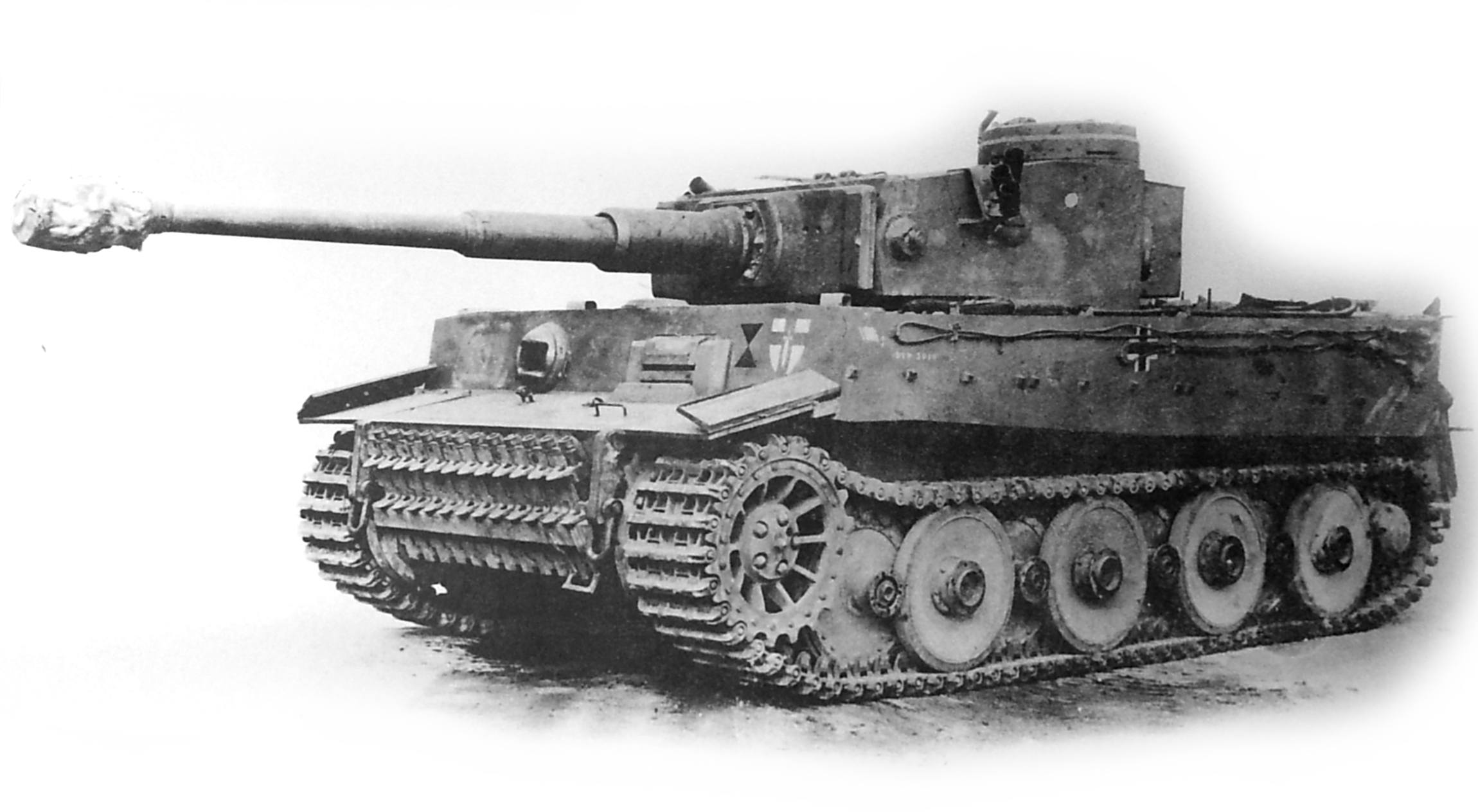 |
| Tiger 131 at the start of crew comfort trials. Narrow transport tracks are installed. The British captured a full set of both transport and combat tracks. |
Wednesday, 4 May 2022
SU-152 Practical Accuracy
The topic of accuracy and precision of Soviet guns comes up a lot. Stereotypically, these guns are depicted in media as being unable to hit the broad side of a barn. Records of trials show otherwise. Here is a record of one such trials at various distances.

Friday, 3 December 2021
85 mm Gun Instructions
"Instructions from the 4th Department of the Combat Training Directorate of the Armoured and Mechanized Forces of the Red Army on the specifics of using the 85 mm tank gun
February 23rd, 1944
- The T-34 tank uses two types of 85 mm gun: D5-T-85 and S-53.In combat the guns are serviced by two crewmen: the gunner and the loader.
- The differences in characteristics of the weapons are negligible. Both are meant to combat enemy armoured vehicles, suppress artillery batteries and anti-tank guns, as well as enemy personnel, at ranges of 1500-2000 meters.
Wednesday, 24 June 2020
Bullseye
Back when I was active in the World of Tanks community, the idea that the D-25T gun could hit the broad side of a barn seemed bizarre and impossible to many. Documents suggesting otherwise elicited heated discussion, with many suggesting that this is anything from an outlier to a fabrication. Fortunately, these trials were commonly performed as a part of standard QA testing, and many similar results are available.
Thursday, 13 February 2020
BS-3 Sights
"1st Ukrainian Front
Directorate of Artillery
December 20th, 1944
#04724
The commander of the 10th Guards Artillery Tank Destroyer Brigade reports that when firing HE grenades from the 100 mm gun at a 1.5 by 1.5 meter target installed at a range of 1200 to 1800 meters using a sight configured as in the manual, the shell passes above the target. A reduction in 2-4 mils gives excellent results (hit on first shot).
The Commander of Artillery of the Front orders that:
- Check the correctness of these conclusions by performing practical firing trials with the 100 mm gun. If similar results are achieved, fire at these ranges with the reduced sight setting.
- Report the results of practical firing trials and deviation from the sight tables when striking a vertical target.
Chief of Staff of Artillery of the 1st Ukrainian Front, Colonel Murzin
Deputy Chief of Staff of Artillery of the 1st Ukrainian Front, Guards Lieutenant Colonel Skrobov"
Tuesday, 2 April 2019
ZIS-S-53 Gunnery Trials
"VII. Trials of armament
Firing the 85 mm mod. 1944 ZIS-S-53 gun
1. Determining accuracy and precision of fire
Accuracy and precision trials were performed using steel HE grenades. Aiming was done with the stock TSh-15 sight.
Ambient temperature: +32 degrees C.
Visibility: good
Range: 1000 meters
Angle of the tank: 0 degrees
Time for firing: unlimited
Fire correction was performed after every shot
Results:
Conditions
|
Distance to
target
|
Shots fired
|
Shots hit
|
Dispersion
radius, cm
|
|
100
|
50
|
||||
Firing from standstill at a vertical target initially.
|
1000 m
|
10
|
10
|
95
|
45
|
After mobility trials and 230 shots
|
1000 m
|
10
|
10
|
54
|
36
|
Tuesday, 27 November 2018
Bow Machine Guns
When tanks were used primarily for infantry support, there was no such thing as too many machineguns. Little machinegun cupolas or full on turrets were quite useful. However, as tanks evolved, the bristle of machineguns boiled down to just one in a ball mount in the front hull. Even this feature came under scrutiny, however, as this British document shows.
"As far as is known no useful progress has been made on this and as has been stated on innumerable amount of occasions before, unless the Ordnance agrees to change the shape of the front glacis plate, they are unlikely to attain a satisfactory solution. It is extremely unfortunate that no honest attempt has been made to tackle this design in the past nine months, since the short ranges of Tunisia have shown that the machine gun will come into its own and this bow machine gun with no sight is merely a means of wasting valuable ammunition. Quite recently it was reported from Tunisia that a tank had expended twice its normal complement of S.A.A. Obviously it cannot be wasted hose-piping it from an unsighted gun.
In the absence of any sight, the following alternative solution is offered. As the bow machine gun stands today, it is the weakest point of the tank. That is to say, the strongest part of the front glacis plate of the M.4 will withstand a striking velocity of 2400 f.s. from 3" A.P.C. M.62 ammunition. The bow gun represents only 1300 f.s. S.V. Officers returned from Africa are of the opinion that this bow machine gun, whether provided with a sight or no, is a waste of ammunition, since it cannot be commanded. They would much prefer twin machine guns in the co-axial mount. We continue to press the Armoured Force for this. Meanwhile, it is recommended that the whole question should be reconsidered by D.R.A.C. with the view to agreeing to the elimination of this bow machine gun in tanks as long as no sight is forthcoming."
-British Army Staff (AFV) Situation Report as on 18th July, 1943
Thursday, 5 April 2018
Theory and Practice
I covered the precision of the ML-20S gun-howitzer before, but numbers on a table are not quite as fun to look at as the trials themselves. Here are the results from the same gun mounted in a SU-152.

"Results of precision trials, February 2nd 1943
Left group: firing from 1000 meters
Right group: firing from 500 meters."
Via Yuri Pasholok.
Thursday, 15 March 2018
Mauser Sniper Rifle

"5. Determining the combat characteristics of the German sniper rifle
The results of determining the muzzle velocity of the German sniper rifle are included in attachment #4, where you can see that the muzzle velocity of the Mauser rifle #6448 is 764 m/s.
The results of the precision and accuracy of the German sniper rifle with open and optical sights are included in attachment #5. Here are the average results.
With open sights
|
With optical sights
| |||||||
Dispersion radii, cm
|
Deviation from point of aiming, cm
|
Dispersion radii, cm
|
Deviation from point of aiming, cm
| |||||
100%
|
50%
|
Vertical
|
Horizontal
|
100%
|
50%
|
Vertical
|
Horizontal
| |
100
|
9.5
|
3.6
|
+12.5
|
+0.7
|
9.4
|
3.9
|
+1.9
|
-20.2
|
300
|
28.3
|
15.0
|
-17.8
|
+14.0
|
33.3
|
15.3
|
-56.7
|
-48.0
|
600
|
47.3
|
25.7
|
-56.3
|
+47.7
|
61.0
|
25.3
|
-165.0
|
-101.7
|
Thursday, 8 February 2018
AK-74 Ballistic Tables
"Characteristics of dispersion for Kalashnikov assault rifles (AK-74 and AKS-74)
Bullet with a steel core
Shooting in short bursts, while prone"
Thursday, 18 January 2018
Small Arms Precision
In 1948, it was clear that the PPSh has served its time, and a new, more powerful automatic infantry weapon was necessary, using an intermediate 7.62x39 mm mod. 1943 cartridge. Several weapons were designed to Tactical-Technical Specification #3131 and tested along with their submachinegun ancestor and the German Sturmgewehr for comparison.
Monday, 25 December 2017
MKb.42(H) Trials
"To the People's Commissar of Defense, Marshall of the Soviet Union, comrade I.V. Stalin
I report that the Main Artillery Directorate performed trials of the captured German 7.92 mm MKb.42(H) carbine, a new type of small arms. As a result of trials, the following characteristics were obtained, compared in the following table with the domestic submachinegun model 1943 (PP-43) and the Simonov light machinegun.
Wednesday, 6 December 2017
G43 Trials

"Trials results
The precision of the semiautomatic G-43 rifle at ranges of 100, 300, and 600 meters, is less than that of the German G-41 rifle and domestic AV-40 rifle. Disassembly and reassembly has no effect on precision and accuracy.
Thursday, 19 October 2017
Full Auto SVT


"Conclusions on the proving ground trials of 7.62 mm automatic rifles, converted from semi-automatic rifles, with 10-15 round magazines showed that:
- Groups at 100 meters when firing in bursts increase by 3-3.5 times.At 300 meters, only 25-30% of the bullets strike a 3x3 meter target.At 500 meters, up to 30% of the bullets strike a 3.5-4 meter target.While shooting with a 15 round magazine, grouping gets worse, and it is difficult to fire while prone due to the protruding magazine.
- When shooting at targets, only the first bullet hits.
- The ability to aim is limited to 50 shots over the span of one minute. After that, the barrel overheats, and a mirage effect is achieved, which impedes aiming.
- The automatic rifle jams:
- With thick grease: 2-4% of the time
- With dry parts: 12-14%
- In dusty conditions: 14-50%
- While aiming up or down: 8-12%
- The barrel life is 6000 rounds when firing 50 rounds per minute, after which the rifle was allowed to cool. Continuous fire brings the life down to 150-200 rounds.
As a result of trials, it was concluded that:
- Is is not viable to create an automatic rifle from a semi-automatic one by modifying the trigger group.
- It is only possible to aim with such an automatic rifle when using a thickened barrel and lightened bipod.
- When converting a semi-automatic rifle to fully automatic by only modifying the trigger group, its combat usefulness decreases to less than that of a submachinegun.
Conclusions
- Due to the decreased combat usefulness, conversion of a semi-automatic rifle to a fully automatic one is not rational.
- In order to reach required density of fire with a high probability of hitting the target, it is better to use submachineguns, which have the advantages of simpler production, higher reliability, compactness, high magazine capacity, larger stocks of ammunition, etc."
Thursday, 14 September 2017
SMG Showdown
In December of 1941, the Soviets decided to test a bunch of SMGs. The SMGs were as follows:
"Model 1940" (PPD)
"Model 1941" (PPSh)
Suomi
Bergman BMP-34 #260
Schmeisser 18/28 #77598
Neuhausen
(They also had something called an Esti, but no ammunition for it).

"Firing of the Esti submachinegun was not performed, due to a lack of ammunition for it.
The results of trials are attached in table 5. Average results are summarized in the following table.
Name
|
Type of fire
|
Spread
|
Group center offset
| ||
R100
|
R50
|
Horizontal
|
Vertical
| ||
Mod. 1940
|
Single
|
24.4
|
8.1
|
+17.0
|
+6.2
|
Burst
|
62.0
|
24.8
|
+29.8
|
+2.8
| |
Mod. 1941
|
Single
|
17.2
|
7.0
|
+16.5
|
-3.5
|
Burst
|
37.4
|
15.7
|
+24.3
|
-2.2
| |
Suomi
|
Single
|
17.4
|
7.0
|
+12.5
|
+12.6
|
Burst
|
36.3
|
11.5
|
+21.0
|
+2.3
| |
Bergmann BMP-34
|
Single
|
16.4
|
5.9
|
+13.4
|
+11.7
|
Burst
|
22.9
|
14.2
|
+16.6
|
+4.0
| |
Schmeisser 18/28
|
Single
|
20.9
|
8.5
|
-13.6
|
-1.5
|
Burst
|
41.3
|
13.9
|
-8.8
|
+0.3
| |
Neuhausen
|
Single
|
14.3
|
6.1
|
+36.9
|
+7.7
|
Burst
|
21.8
|
7.1
|
+25.5
|
+9.0
| |
The data shows that the best precision, either when shooting in bursts or in single fire, is achieved by the Neuhausen submachinegun.
The worst precision results were achieved by the model 1940 submachinegun."
Via Andrei Ulanov.
Thursday, 7 September 2017
SVT as a Sniper Rifle

"Description of the issue:
Proving grounds and battlefield tests of self-loading sniper rifles developed by factory #314 based on approved and prototype blueprints revealed unsatisfactory shot groups, and significant deviations of the first and second bullets from the dispersion ellipse.
Both drawbacks are caused by design flaws in the rifle and scope mount.
Attempts by the factory to improve groupings with small design proved fruitless, as reducing dispersion and preventing the 1st and 2nd bullet from deviating too much requires significant changes to the rifle and scope mount.
Since, currently, the 7.62 mm model 1891/30 sniper rifle with the PE scope is being manufactured, and a scope mount for the PU scope for the same rifle is under development, it is reasonable to cease production of 7.62 mm self-loading rifles with the PU scope, provided that proving grounds trials of the model 1891/30 rifle prove satisfactory.
Decisions of the Artillery Directorate of the Red Army:
1. Finish trials of the PU scope mount for the model 1891/30 sniper rifle no later than August 20th, 1942.
2. If results are positive, cease production of self-loading sniper rifles starting on September 1st.
3. If the self-loading sniper rifle is removed from production, increase production of model 1891/30 sniper rifles."
Via Andrei Ulanov.
Via Andrei Ulanov.
Monday, 20 February 2017
76 mm M7 Gun Trials
"Conclusions
The conclusions of trials of American armour piercing-tracer M-62 shells against armour described in table #17 and illustrated in the graph shows that:
- The penetration quality of American 76 mm AP-T shells can, under favourable conditions (angle/distance), effectively penetrate targets (tanks, SPGs, bunkers) with armour up to 120 mm thick.
The penetration quality of domestic 76 mm AP-T shells (blueprint #2-09038) allows for effective penetration of only 100 mm of armour under identical conditions to American 76 mm AP-T shells.
Subscribe to:
Posts (Atom)