Despite popular belief, the issue of finance was a pressing one for the Soviet Union. In this video I talk about how much were troops of the Red Army's tank paid and where they could make a couple of extra rubles.

This blog is dedicated to bringing World War II era documents to the general public, with an overall focus on armoured warfare. Questions? Requests? Comments? Email me at tankarchives@gmail.com or find me on Twitter @Tank_Archives.
Showing posts with label time and money. Show all posts
Showing posts with label time and money. Show all posts
Wednesday, 29 July 2026

Monday, 25 September 2023
Two Tanks In One
A story of what a Main Battle Tank is and how it came to be.
Tanks evolved considerably over the course of over 100 years of service. The first tanks were built to break through enemy fortifications, but still ended up being much smaller than the landships that H.G. Wells dreamed of. Nevertheless, the effect they had was considerable. All armies of the world wanted to have their own tanks, but not all managed to create one. A tank only seems simple, but in reality is quite a complicated fighting machine that requires a powerful industry to produce. Far fewer nations managed to build their own tanks than their own aircraft. In addition, like any weapon individual tanks quickly became obsolete. It is only in the last few decades that tank development slowed down from its breakneck pace. Tanks remain one of the key types of vehicles on the battlefield. There have been many attempts to write them off as a relic of the past, but practice shows that this time has not yet come.
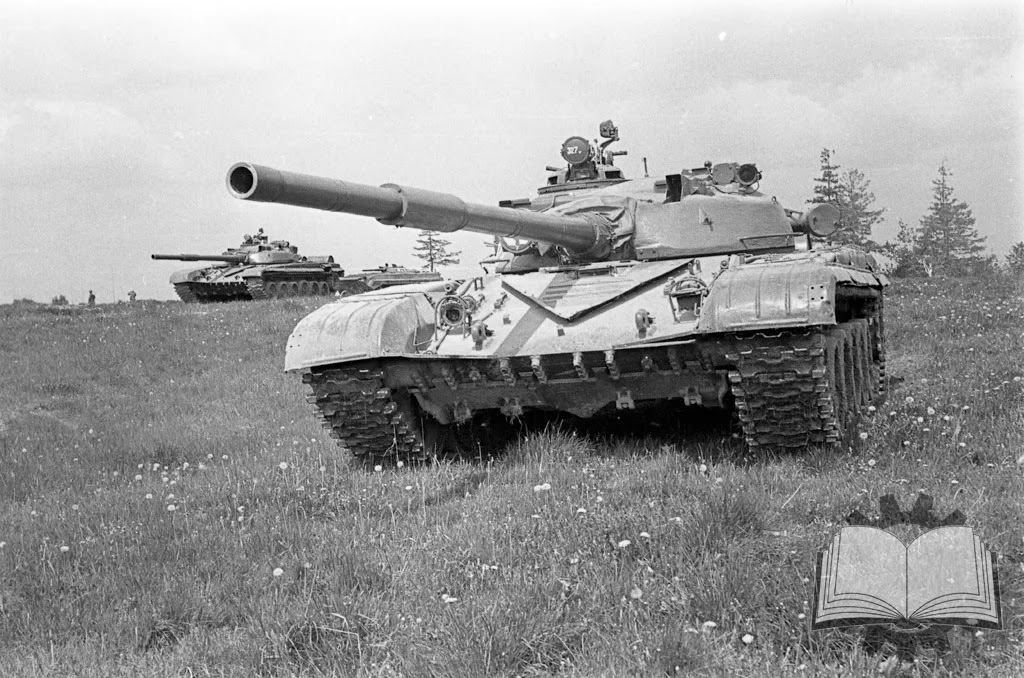 |
| T-72, the most numerous Main Battle Tank. These tanks were developed in the late 1960s but continue to serve and will do so for decades to come. |
Wednesday, 24 May 2023
The Last of Stalin's Robots
Unfortunately, museums frequently mislabel their own exhibits. The biggest problem with that is an incorrect information from a museum label is going to propagate. For example, Kubinka seriously thought that they had two BA-6 armoured cars, even though one was actually a BA-3M. The collection of the Patriot Park museum which used to be displayed at Kubinka has many downright unique exhibits, some of which were also misidentified. For example, this tank is called OT-130, but that is not the case.
 |
| TT-26 tank as displayed today. |
In reality, the tank currently displayed in the pavilion depicting the war against Japan is the only surviving TT-26 teletank. This tank was once the subject of Yuri Pasholok's volunteer painting team. Let us tell the tale of this unique tank with a unique combat history.
Wednesday, 15 March 2023
Tanks Worth Their Weight in Gold
Ways in which Germany could have been victorious in WW2 are still a popular topic of discussion in some circles. One can often hear the claim that the war on the Eastern Front would have ended in 1941 with the fall of Moscow if not for the timely appearance of Lend Lease tanks, issued to the USSR free of charge. As common as this argument is, it has little basis in the truth. Let us see what Western tanks appeared in the USSR and when, and what effect these vehicles had on the course of the war.
Before Lend Lease
For starters, let us clarify what Lend Lease actually was and what it had to do with military assistance to the USSR. The Act to Promote the Defense of the United States was signed into law by the 77th Congress of the United States on March 11th, 1941. It gave the president of the still neutral country the ability to supply weapons, transport, tools, raw materials, agricultural or industrial machinery to any nation whose protection was considered vital to the defense of the United States. The term “lend lease” was derived from the ability to “sell, transfer title to, exchange, lease, lend, or otherwise dispose of” any of the aforementioned items to these nations granted by this act. While the president of the United States had the power to give them away for free, that was far from his only option.
 |
| Matilda tanks earmarked for the USSR. |
Friday, 27 January 2023
Overrated Soviet Medium Tank
Soviet tank building began to fall behind worldwide trends in the early 1930s. In part, this was because even prospective tanks were designed based on mid-1920s ideas while the rest of the world moved on. The UMM (Directorate of Mechanization and Motorization) created in November of 1929 found a solution to this problem. Fitting vehicles were purchased abroad in 1930-31. Initially the plan was to buy samples for familiarization, but all this changed after Khalepskiy's commission went abroad. It was obvious that Soviet tanks in development were incapable of reaching required characteristics and mass production would be accompanied with a mass of troubles.
 |
| The T-28 was the best known original Soviet tank of the 1930s. |
Wednesday, 11 January 2023
Building KVs
"Addendum to agreement #B1-081 signed between the GABTU and Kirov factory for the year 1941
This addendum is signed on [rubbed out] June July 1941 between the GABTU (Customer) represented by Deputy Chief of the GABTU Major General of the Technical Forces I.A. Lebedev and Chelyabinsk factory (Vendor) represented by Deputy Director comrade Obrant and is based on State decree #525-224 issued on March 13th, 1941.
The Vendor accepts the responsibility of producing and delivery of 500 33 KV-3 tanks and increase of monthly delivery of KV-1 tanks by 10 units and the Customer accepts these vehicles and pays the previously agreed price of 740 thousand rubles for each one.
Delivery of KV-3 tanks is conducted in accordance with blueprints and technical requirements developed by the Kirov factory and the tactical-technical requirements approved by the State.
Blueprints and technical requirements are subject to final approval by the GABTU after the prototype is tested.
The agreed upon price of one KV-3 tank with parts and instruments is established at 740,000 rubles and is subject to adjustment according to calculations in reports delivered in October of this year. All calculations to establish the price of the KV-3 are subject to revision based on these reports.
In accordance to State decree #548-232s issued on March 15th, 1941, the amount of KV-1 tanks build according to agreement B1-081 is reduced by 100 units, as a result of which the cost of the contract is reduced by fifty two million three hundred thousand (52,300,000) rubles.
The overall cost of the KV-3 tanks is established by this addendum to equal three hundred and seventy million rubles (370,000,000).
The final cost of contract B1-081 including the addendum is therefore six hundred and thirty five million rubles (635,000,000).
The Vendor accepts the responsibility of producing a manual for the KV-3 vehicle by November 1st, 1941 and a catalog of spare parts by November 1st, 1941.
All other sections of the contract B1-081 remain in force.
[Signatures]
June 5th, 1941"
|
Item |
Amount |
Unit cost (thousand) |
Total (thousand) |
|
|
KV-1 tank |
400 |
523 |
209,200 |
|
|
KV-2 tank |
100 |
558 |
55,800 |
|
|
KV-3 tank |
500 |
740 |
370,000 |
|
|
Total |
1000 |
- |
635,000 |
|
|
KV-1 |
KV-2 |
KV-3 |
|||
|
|
Amount |
Cost |
Amount |
Cost |
Amount |
Cost |
|
January |
40 |
20,920 |
- |
- |
- |
- |
|
February |
45 |
23,535 |
- |
- |
- |
- |
|
March |
50 |
26,150 |
- |
- |
- |
- |
|
Q1 Total |
135 |
70,605 |
- |
- |
- |
- |
|
April |
65 |
33,995 |
- |
- |
- |
- |
|
May |
- |
- |
70 |
39,060 |
- |
- |
|
June |
50 |
26,150 |
30 |
16,740 |
- |
- |
|
Q2 Total |
115 |
60,145 |
100 |
55,800 |
- |
- |
|
July |
100 |
52,300 |
- |
- |
- |
- |
|
August |
50 |
26,150 |
- |
- |
55 |
40,700 |
|
September |
- |
- |
- |
- |
105 |
77,700 |
|
Q3 Total |
150 |
78,450 |
- |
- |
160 |
118,400 |
|
October |
- |
- |
- |
- |
110 |
81,400 |
|
November |
- |
- |
- |
- |
110 |
81,400 |
|
December |
- |
- |
- |
- |
120 |
88,800 |
|
Q4 Total |
- |
- |
- |
- |
340 |
251,600 |
Monday, 9 January 2023
Kirov Factory's Light Alternative
The appearance of Zhosef Yakovlevich Kotin as the chief of the Kirov factory's SKB-2 design bureau in 1937 launched a number of interesting processes. Under O.I. Ivanov before him, the bureau sat quietly and worked on ideas that came from the top. There were few original projects, and the ones that were weren't seriously considered. The situation radically changed when Kotin arrived on the scene. A fierce competition broke out with experimental factory #185 that previously held a monopoly. The monopoly on breakthrough tanks was the first to crumble. This was Kotin's achievement, as he created first the SMK-1 then the KV. Factory #185 wanted to build their alternative to the KV with the index 050, but while the KV was accepted into service the 050 was not even built. At this point the experimental factory was reaching the end of its life.
 |
| An experimental hull of the T-221, Kirov factory's first support tank. |
Factory #185 was also losing territory to factory #174. In 1939-1940, the latter did more than the former achieved in a very long time. This only happened due to the arrival of S.A. Ginzburg at factory #174. Ginzburg had an excellent understanding of a vehicle's lifecycle.
Monday, 8 August 2022
The Unluckiest Next Generation Tank
The history of mass production and use of Soviet T-50 infantry tanks and why it was doomed to fail
Initially, small tanks (later support tanks and then combined arms tanks) became the most numerous of their kind in the USSR. The MS-1 (T-18) and then T-26 became the most numerous tanks of the Red Army. The T-26's abilities were quite sufficient to escort infantry, and its relatively low speed compared to the BT also made it a more stable firing platform. Since the T-26 had nearly no oscillations after a sudden stop, it could conduct aimed fire much more accurately than the BT, which would rock back and forth. The T-26 was also 1.5 times cheaper and produced in larger volumes.
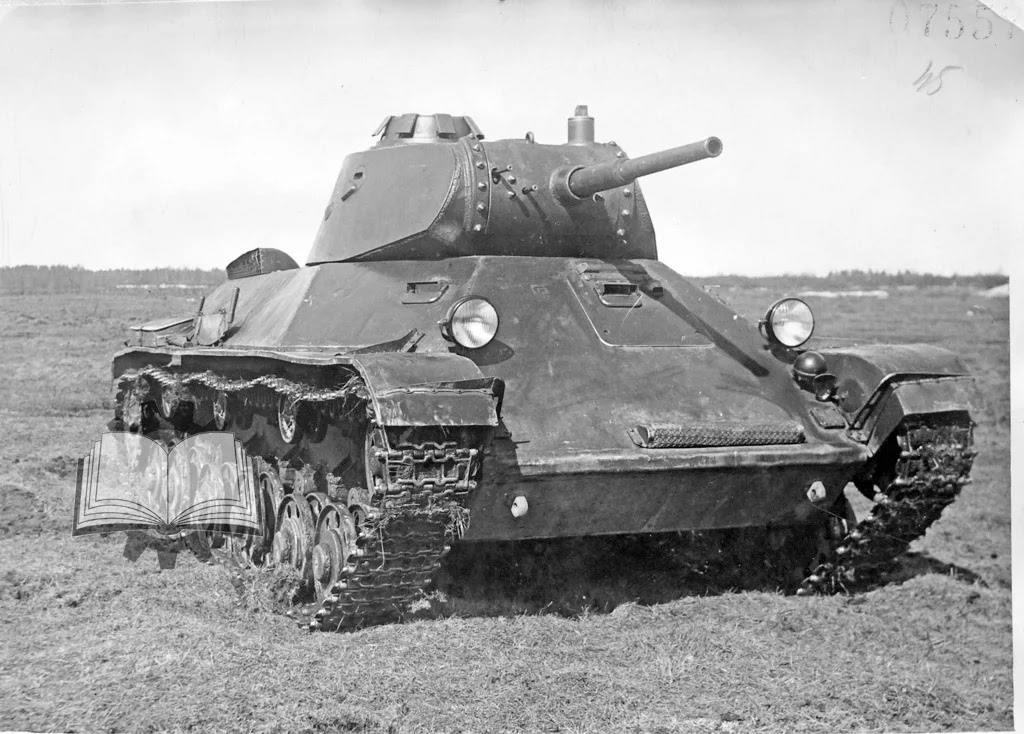 |
| First prototype of the T-50 after improvements, spring 1941. |
Wednesday, 1 June 2022
Start of the Kubinka Museum
"April 19th, 1938
The RKKA has obsolete tanks of various types, experimental domestic vehicles, samples obtained abroad, and captured vehicles that cannot be restored and used as fighting vehicles.
- T-18 tanks: 862
- Ricardo [Mark V]: 15
- Vickers 12 ton: 16
- T-24: 24
- T-41: 8
- T-33: 1
- T-34: 1
- Renault: 2
- Carden-Loyd: 4
- PT-1: 1
- T-29: 1
- T-46: 1
- T-43: 1
- T-26 APC: 1
- T-26 munitions carrier: 1
- T-26 fuel carrier: 1
- SU-14: 1
The Supreme Military Council of the RKKA decrees that the tanks will be used in the following ways:
Subscribe to:
Posts (Atom)