The Tiger and Panther had wide tracks and powerful engines that should, at least in theory, have given them good performance in heavy mud and other difficult terrain. I look at whether or not this was actually the case in my latest video.

This blog is dedicated to bringing World War II era documents to the general public, with an overall focus on armoured warfare. Questions? Requests? Comments? Email me at tankarchives@gmail.com or find me on Twitter @Tank_Archives.
Showing posts with label Panther. Show all posts
Showing posts with label Panther. Show all posts
Monday, 30 March 2026

Sunday, 29 October 2023
Video: Can an IS-2 hit a target at long range?
The IS-2's can penetrate the Panther's armour at effectively any range, but can it hit? In my latest video, I take a look at the theoretical and practical precision of the IS-2's 122 mm D-25T gun to see if it could hit a Panther-sized target at long ranges.
Monday, 25 September 2023
Two Tanks In One
A story of what a Main Battle Tank is and how it came to be.
Tanks evolved considerably over the course of over 100 years of service. The first tanks were built to break through enemy fortifications, but still ended up being much smaller than the landships that H.G. Wells dreamed of. Nevertheless, the effect they had was considerable. All armies of the world wanted to have their own tanks, but not all managed to create one. A tank only seems simple, but in reality is quite a complicated fighting machine that requires a powerful industry to produce. Far fewer nations managed to build their own tanks than their own aircraft. In addition, like any weapon individual tanks quickly became obsolete. It is only in the last few decades that tank development slowed down from its breakneck pace. Tanks remain one of the key types of vehicles on the battlefield. There have been many attempts to write them off as a relic of the past, but practice shows that this time has not yet come.
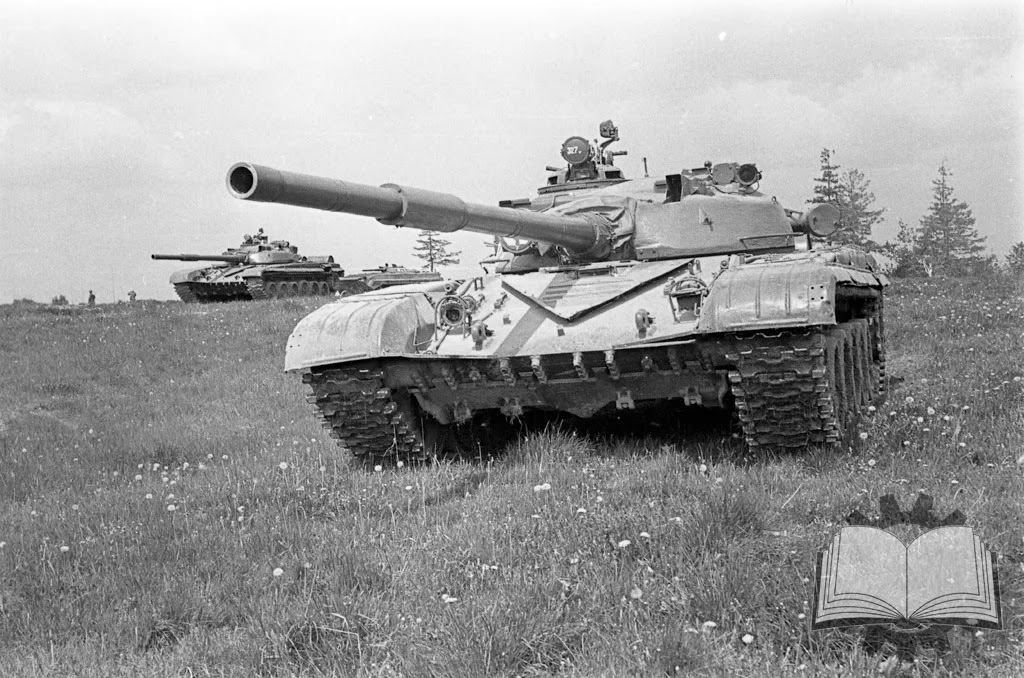 |
| T-72, the most numerous Main Battle Tank. These tanks were developed in the late 1960s but continue to serve and will do so for decades to come. |
Monday, 24 July 2023
Between the Pz.Kpfw.III and the Panther
German medium tanks that could not replace the Pz.Kpfw.III or IV
One might think that tank building developed very sluggishly in the interwar years. This is a mistake. Development continued even in the most difficult years when there was no money for tanks. Every 3-4 years tactical-technical requirements were revised and development of new prototypes began. Germany did not differ from the rest of the world in this regard. Since Germany was bound by the terms of the Treaty of Versailles, this cycle was concealed, but the mask was dropped in the early 1930s even before the Nazis came to power. This is when the tanks that Germany entered the war with began to form.
 |
| A broken Pz.Kpfw.III Ausf.F. Frequent gearbox failures were the reason why production of the Z.W.38 fell behind schedule and the relationship between Daimler-Benz and Heinrich Kniepkamp was ruined. |
There are many cases in tank building where a nation manages to catch one wave of trends and miss the next. The USSR managed to create a successful series of tanks in the early 1930s but failed to do so in the mid-30s. On the other hand, German tanks developed in the early 30s were failures, but the designers redeemed themselves a few years later. Subsequently, while the USSR got the successful T-40, T-34, and KV-1 at the end of 1939, the Germans entered the new decade with a completely different result. One example is the story of the tanks that was supposed to replace the Pz.Kpfw.III and the Pz.Kpfw.IV: the VK 20.01 and its relatives.
Friday, 24 March 2023
Panther's Ins and Outs
The Tiger tank no doubt holds the title of the most famous German tank of WW2. The tank is often mentioned as an example of the idea of “quality over quantity”, Tiger aces widely known, and the tanks and battles they fought in are often recreated in movies and video games. However, a more dangerous opponent appeared on the battlefield in July of 1943. The Panther tank had more effective front armour, a more powerful gun, and most importantly the odds of running into a Panther was much higher. The Allies spent a lot of time and effort on finding out its weaknesses. This article will cover the results of British investigations.
A mysterious enemy
Panthers first appeared on the Eastern Front. The Western Allies found out about it pretty quickly from the July 24th 1943 edition of the Red Star newspaper. The information contained in this article was imprecise, but the information exchange continued. More or less accurate information was available by September, and in December of 1943 the British came across a treasure trove. A notebook belonging to a scout from the 26th Reconnaissance Battalion that contained notes on the tank’s characteristics fell into the hands of the 8th Army in Italy. The British discovered that the tank fired three kinds of rounds: armour piercing, subcaliber, and high explosive. The armour piercing rounds were effective at a range of up to 2000 metres, but in some cases it was permitted to fire at a range of 2500 metres. The armour piercing shell penetrated up to 138 mm of armour at an angle (the angle was not noted). Subcaliber shot could be used to engage heavily armoured targets at a range of under 2000 metres. It penetrated up to 194 mm of armour. The high explosive round had a range of up to 4000 metres. The scout noted that the HE shell could not deal significant damage to an enemy tank but could still jam the turret of a Matilda or T-34 tank with a good hit.
 |
| Panther Ausf.D tank #443. The British received a tank from the USSR for testing long before they found one on their own. |
Monday, 6 March 2023
Video: IS-2 vs Panther, Math and Reality
I've frequently seen the claim that the front of the Panther tank was nearly invulnerable to the IS-2's 122 mm D-25T gun if correctly angled. Indeed, penetration equations suggest that would be the case, but reality is a lot more complicated than that. In this video I go into detail about how line-of-sight armour thickness doesn't tell the whole story.
Monday, 13 February 2023
A German Cat in King George's Court
Study of the enemy’s new weapons or vehicles is always one of the army’s highest priority objectives. The appearance of the Panther tank on the battlefields of WWII could not have gone unnoticed without the Allies’ knowledge, and the British were no exception. Information on this new tank was gathered in several stages.
Foreign sources
Rumours about a new German tank began to arrive in the UK in the summer of 1943. The British military attache in the USSR sent a translation of an article published in the Red Star newspaper on July 24th, 1943, describing the use of a new German tank called “Panterra”. There was little information on this tank, plus the author continuously mixed up the Panther and Ferdinand. More accurate information only arrived on September 7th. With hindsight, we can see that the 45 ton “German Heavy Tank, Mark V” armed with a 75 mm gun and equipped with eight interleaved road wheels per side is indeed the Panther.
These same characteristics were later published in the American Tactical & Technical Trends magazine, with one important distinction: the tank was now called a medium tank, a halfway point between the 22 ton Panzer IV and 57 ton Tiger. Despite the weight difference, the Americans considered this 45 ton tank to be an analogue of their own Sherman, which according to American sources was highly regarded by the Germans.
 |
| One of the first images of the Panther tank widely distributed among the Allies |
Monday, 7 November 2022
Shermans in Mud
The Medium Tank M4 showed itself as an effective weapon over the course of decades of service. Tanks from the Sherman family successfully fought in every corner of the world in WW2 and after. However, these tanks still had a number of design drawbacks that American engineers had to fight to solve while the tank was already in production. One of these drawbacks was poor mobility in soft soil.
Attachments of every kind
One of the reasons why the Sherman’s off-road mobility left much to be desired was the high ground pressure. Even the prototype Medium Tank T6 didn’t have particularly wide tracks, and every subsequent variant of the Sherman became heavier and heavier. Ground pressure increased along with weight.
 |
| A Medium Tank M4A1 that sank in mud, Miturno, Italy, 1944. The high weight and narrow tracks of this vehicle meant that off-road mobility was low. |
Friday, 20 May 2022
The Necessary Pair
Why the Panther couldn't replace the Pz.Kpfw.IV and why the Germans spent the whole war with two medium tanks.
The German tank building school was among the best in WW2. One could say it finished in second place overall. For instance, the Panther was a very competitive medium tank. The T-34 and Medium Tank M4 had advantages over it in production qualities and modernization potential, but the Panther surpassed them in armour and firepower while maintaining decent mobility. This tank was supposed to become Germany's main tank. It became the most numerous tank in the Germany army by the second half of 1944. Three factories built this tank, putting out 350 units monthly at the peak of production in the summer of 1944. The Panther was also a key part of the future of German tank building. This tank was supposed to be the only medium tank remaining in production by the second half of 1945. It would even be developed further. The Panther Ausf.F with improved frontal protection was supposed to become the main variant.
 |
| Three German medium tanks in one shot, July 1943. The Pz.Kpfw.III was on its way out, the Pz.Kpfw.IV was here to stay, and the Panther that couldn't quite replace it. |
There is a common misconception that once the Panther appeared on the scene production of other medium tanks either stopped or began to wind down, after which it quickly became Germany's main tank. In reality, peak production of the Panther coincided with peak production of Germany's other medium tank, the Pz.Kpfw.IV. The difference in production volumes was not so great, which is a feat considering that only one factory build Pz.Kpfw.IV tanks starting with the summer of 1944: Nibelungenwerke. Medium SPGs are incomparable, as only the StuG 40 and StuH 42 outnumbered the vehicles built on the Pz.Kpfw.IV chassis, even though it was considered outdated in early 1944. This seems like a paradox, but there were good reasons why the Pz.Kpfw.IV entered production in November of 1937 and stayed there so long and why production of two medium tanks continued throughout the entire war.
Monday, 2 May 2022
The Fight for Sight
Optics often come up in discussions that compare Soviet and German tanks. The famous "Zeiss optics" are often invoked by those who are not very well versed in the subject matter. The issue was not in Soviet sights. Plenty of them survived to this day, and any who wish can evaluate their quality on their own. German tanks were first and foremost superior in their observation devics. Their visibility was better than that of Soviet tanks, which was often a deciding factor in victory on the battlefield. However, the evolution of German observation devices is an interesting topic for discussion.
Friday, 29 April 2022
Warspot Article: Panther's Ins and Outs
The Panther was arguably the most dangerous German tank of WW2, available in greater numbers than the Tiger and equipped with a higher penetrating gun and greater frontal armour. The British dedicated considerable resources to finding out its weaknesses, starting long before they had to face a Panther tank in combat. Read about what they found in my latest article on Warspot.net.

Friday, 4 March 2022
Panther Weak Spots
Soviet diagrams showing areas where to shoot enemy tanks are pretty common. There were both elaborate ones showing various weapons printed at the Publisher of the People's Commissariat of Defense and simpler ones, produced in the field, showing whatever weapons were relevant for the unit that printed them. Here are two such flyers for the Panther.

The first one is relatively well known. Each drawing of a shell shows the range and caliber with which you can destroy a Panther tank. The small bullets are 14.5 mm bullets fired from the PTRD or PTRS. The large tube symbol under that is HE, a projectile partially filled with red is an AP shell, a fully red projectile is solid AP shot. The red arrowhead projectile is 45 mm APCR.
Wednesday, 2 March 2022
Comparing Shells
"Report of the GBTU Self Propelled Artillery Directorate on results of comparative penetration trials of American, German, and domestic AP shells
May 13th, 1945
Firing according to the attached velocities was done at the Main Artillery Proving Grounds of the GAU at NKB proving grounds at Sofrino
Results of firing the shells at armour plates at prescribed velocities (see table)
#1: 76 mm AP shells against 50 and 75 mm thick plates.
The experimental shell from 60Kh30 steel shows undoubtedly superior results compared to the stock shell or the American shell.
Monday, 7 February 2022
How to Lose Everything and Learn Nothing
German tanks and SPGs of the second half of WW2 are often praised as "wonder weapons". Based on what is written about them, one can only come to the conclusion that Germany lost WW2 by accident. This is often said about the "big cats": the Tiger, Panther, and so on. Indeed, Germany's tank industry took a lead in 1943. Thanks to a sudden jump forward, one can argue that Germany had the best heavy and medium tanks. However, it was in the second half of 1943 that the Germans began to lose their grasp on the Eastern Front. A year later, German tank industry was no longer in the lead. The issues it faced were systematic, and despite an arguable second plate in the tank race, the Germans had no future when it came to either the tanks or their armament.
Wednesday, 26 January 2022
Gas Siphon
"Award Order
- Name: Polyakov, Anatoliy Arkadyevich
- Rank: Guards Red Armyman
- Position and unit: mechanic-fitter of the technical support company, 18th Minsk Order of the Red Banner Guards Tank Brigadeis nominated for the "For Courage" medal.
- Year of birth: 1920
- Nationality: Russian
- In the Red Army since: 1940
- Party affiliation: none
- In combat since: August 7th, 1942
- Wounds and contusions: none
- Prior awards: Defense of Stalingrad medal
- Recruited by: Vladimir recruitment office, Ivanovo oblast
Brief and specific description of combat heroism or accomplishments: A T-34 tank was knocked out in battle on October 13th, 1944. In order to repair it, several road wheels had to be transported from the brigade's repair base.
When the order was given, the repair truck had no gasoline, which delayed delivery of spare parts. Comrade Polyakov suggested siphoning gasoline from a Panther tank knocked out in no man's land. He carried out this mission within 20 minutes, which made delivery of parts and repair of the T-34 tank possible.
For his resourcefulness and fearless action, he is worthy of the "For Courage" medal.
Commander of the technical support company of the 18th Minsk Order of the Red Banner Guards Tank Brigade, Guards Captain Denisov"
Friday, 24 December 2021
Bigger Guns
"February 5th, 1945
Evaluation of tank armament
In 1944 the Germans accepted the Tiger B tank into service, which is now the main type of enemy heavy tank.
The Tiger B tank has powerful front armour and the 88 mm KWK-43 gun. The AP round of this gun has a muzzle velocity of 1000 m/s with an aimed rate of fire of about 6 RPM.
The second type of main German tank is the Panther medium tank. This tank has a 75 mm gun with a muzzle velocity of 1000 m/s and rate of fire of 7-8 RPM.
The AP shells of these tanks can penetrate our tanks from 1500-2000 meters.
Monday, 1 November 2021
The Third Reich's Last Tanks
German tank building was in a difficult state towards the end of WW2. The issue wasn't just in factories damaged by bombers, loss of significant territories, and shortages of resources. The consequences of mistakes in planning and production as well as unscrupulous competition began to crop up. Let's take a look at how the new head of the Panzerkommission tried to bring order back to German tank building and what came of it.
Wednesday, 8 September 2021
85 mm for Dummies
Death to German occupants!
Areas of
GERMAN TANKS
vulnerable to the 85 mm gun
Directorate of the Commander of the Armoured and Mechanized Forces of the Red Army
Military publisher of the USSR NKO, Moscow, 1944

Monday, 14 June 2021
Germany and the T-34
The Wehrmacht was stuck at Moscow in the winter of 1941, and leadership of the Reich had time to think while its troops developed frostbite. The first encounters with the T-34 and KV-1 tanks showed that Soviet engineers were much better at implementing thick shell-resistant armour and powerful tank engines. A whole commission arrived on the front on November 18th, 1941, to survey the situation. The commission included the head of the Tank Commission Ferdinand Porsche, his deputy and director of the Steyr company Oscar Hacker, head of Department #6 of the Ordnance Directorate colonel Sebastian Fichtner, the civilian head of Department #6 engineer Heinrich Kniepkamp, and high ranking representatives of leading arms companies: Krupp, Daimler-Benz, Henschel, MAN, and Rheinmetall. They examined Soviet tanks and evaluated the harsh conditions of winter and the lack of roads.
No one doubts that this examination had a significant effect on further development of the German tank school. But what were their conclusions? How did Soviet tanks influence German tank building? There are many different opinions about this, right down to calling the Panther a poor copy of the T-34. What was the real change to the German way of building tanks after the fall-winter of 1941?
Wednesday, 5 May 2021
A German Cat in King George's Court
As soon as a new enemy tank appears on the battlefield, it is critically important to study it and find out which of its strengths can be mitigated and which weaknesses can be exploited. In case of the Panther tank, the British spared no effort. A Panther shipped from the USSR was tested before British troops ever met one in the wild. In addition to tanks captured throughout the war, several Panthers were assembled under British supervision and taken back to the UK to perform thorough trials. Read what the British learned about this German beast in my latest article on Warspot.net.

Subscribe to:
Posts (Atom)