Showing posts with label post-war. Show all posts

Sunday, 21 April 2024

Single Hatch for Tank Turrets

The interwar period was a time of new technical solutions, and tanks were no exception. Even though tank development was allocated a limited budget, experiments never stopped. The budgets began to swell in the early 1930s, which coincided with a rapid growth of tank characteristics. Various improvements were implemented, including those that improved the crew's working conditions. 

T-34 in Crimea, 1944. Factory #112 was the last to keep the turret with a single hatch in production. One of their tanks can be seen in the foreground.

One of the characteristic features of Soviet tanks and armoured cars in the late 1930s was the conical turret that came to replace the earlier cylindrical shape. Some vehicles also received a single hatch for their two-man turret. The T-34 tank was the most famous vehicle with this solution. This idea was dropped only to resurface in post-war designs. Let us discuss why this hatch appeared in the first place and why it disappeared.

Monday, 25 September 2023

Two Tanks In One

A story of what a Main Battle Tank is and how it came to be.

Tanks evolved considerably over the course of over 100 years of service. The first tanks were built to break through enemy fortifications, but still ended up being much smaller than the landships that H.G. Wells dreamed of. Nevertheless, the effect they had was considerable. All armies of the world wanted to have their own tanks, but not all managed to create one. A tank only seems simple, but in reality is quite a complicated fighting machine that requires a powerful industry to produce. Far fewer nations managed to build their own tanks than their own aircraft. In addition, like any weapon individual tanks quickly became obsolete. It is only in the last few decades that tank development slowed down from its breakneck pace. Tanks remain one of the key types of vehicles on the battlefield. There have been many attempts to write them off as a relic of the past, but practice shows that this time has not yet come.

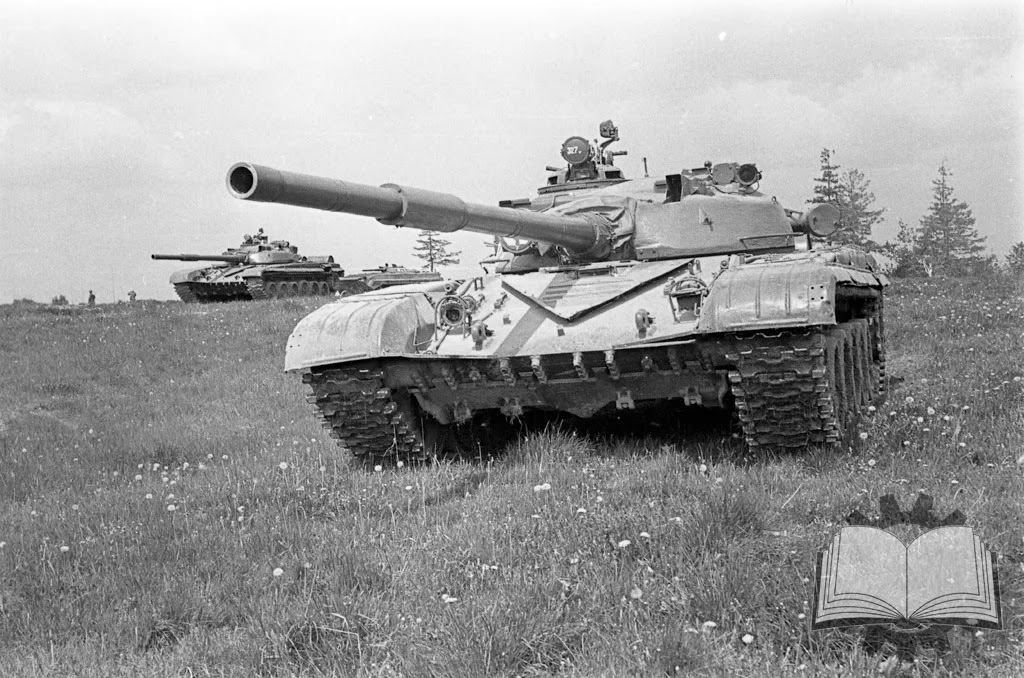
T-72, the most numerous Main Battle Tank. These tanks were developed in the late 1960s but continue to serve and will do so for decades to come.

Friday, 21 July 2023

Special Design Bureau

 "State Committee of Defense
to comrade L.P. Beria

Several major German small arms designers remain in the German territory occupied by Soviet troops.

  1. Stange, creator of the MG-34 and MG-42 machine guns as well as other systems. Stange worked at the Rheinmetall-Borsig design bureau in Sömmerda.
  2. Grune, creator of the MG-42 and MG-45 machine guns. He led the design bureau at the Johannes Grossfuss company in Döbeln.
  3. Horn, creator of a new automatic carbine. He worked together with Grune at the  Johannes Grossfuss design bureau in Döbeln.
  4. Schmeisser, creator of the MP-40 submachine gun, MP-44 automatic carbine, and a number of other systems. Schmeisser owns the Haenel factory in Suhl. 
  5. Barnitzke, creator of anti-tank rifles and a new automatic carbine. Barnitzke led a design group at the Gustloff-Werke factory in Suhl since 1925.
  6. Gropp, a specialist in automatic carbines and semiautomatic rifles, worked in Barnitzke's group at the Gustloff-Werke factory in Suhl.
  7. Ladek, a pistol specialist. Worked in Barnitzke's group at the Gustloff-Werke factory in Suhl.
  8. Lorentz, leader of the ammunition group at the Polte factory design bureau in Magdeburg. Creator of the model 1943 intermediate round. 
Due to the high level of qualification of the aforementioned designers, it is sensible to recruit them to work in a special design bureau.

Chief of the Red Army GAU, Marshal of Arillery, Yakovlev
September 4th, 1945."


Isayev notes that the descriptions of the German designers' achievements is not necessarily correct. For instance, Schmeisser didn't create the MP-40 (which is correctly reflected in lower level reports).

Tuesday, 13 June 2023

Aquino Tank Weekend: T-34-85

Last weekend I had the pleasure of assuming the role of a T-34-85 tank commander during Aquino tank Weekend at the Ontario Regiment Museum. In this video, I cover what we know about the history of this particular tank and briefly show it in action. 


Monday, 21 November 2022

A Tank from a Former Ally

The T-34 was a mystery for the USSR’s allies for most of WWII. A sample of the legendary tank was only sent abroad in 1943, but information about an improved variant with a 3-man turret and an 85 mm gun became available soon after. Very little was known about this tank up until the spring of 1945, and with the end of the war the remote possibility of getting a sample vanished altogether. However, the odds of seeing this tank again increased with time. The Korean War broke out on June 25th, 1950. The Korean People’s Army (KPA) received aid from the USSR, which included T-34-85 tanks.

Old tanks in a new war

According to American sources, the North Koreans crossed the border on June 25th, 1950, with one armoured division consisting of three regiments numbering 160 T-34-85 tanks in total. The 16th and 17th Armoured Brigades joined them by September, and in November the 17th Mechanized Division with 41 tanks and 41st, 45th, and 46th Tank Regiments with 10 tanks each and the 43rd Mechanized Regiment with 13 tanks also crossed the border. According to the Americans, the North Koreans initially built up a force of 320 tanks in total, which was later reinforced by another 250 tanks.

A T-34-85 tank and a column of motorcyclists belonging to the Korean People’s Army.

Friday, 9 September 2022

Swords to Plowshares

 "Report to Marshal of the Soviet Union N.A. Bulganin

#00810675

November 17th, 1947

Armoured and Mechanized Forces are in possession of 1185 foreign tanks, broken down as follows:

  • 889 functional (including 756 M4A2 and 54 Valentine)
  • 146 need medium repairs
  • 57 need major repairs
  • 93 are unserviceable

Wednesday, 20 July 2022

T-54 at Aquino Tank Weekend

The T-54 tank and its close successor the T-55 were key players in nearly every Cold War conflict. Many nations keep these tanks in service to this day and even though they are no match for modern MBTs, modernization kits ensure that even these veterans can still pack quite a punch. The museum's vehicle was captured by British forces in Iraq and made its way to Canada from there.


Monday, 20 June 2022

"Tigers" from Lvov

Yuri Ozerov's cinematic series Osvobozhdenie (Liberation) began in 1968 with the film Ognennaya Duga (Fiery Salient). Its battle scenes were shot a year prior in the Kiev Military District on the territory of the Rzhyshchiv training center. The 1827th regional army base issued a large number of captured German weapons for filming, but there were no German armoured vehicles in storage in the Kiev Military District or anywhere else. The 17th Tank Repair Factory of the Carpathian Military District was tasked with production of replica Tiger tanks in the spring of 1967. This factory was formed in Lvov in July of 1944 to repair vehicles of the 1st and 4th Ukrainian Fronts.

"Tiger" tanks built at the Lvov Tank Repair Factory, Ognennaya Duga (1968)

Monday, 6 June 2022

T-54 with a Pipe

The army always needs tanks that can cross water obstacles. There are two ways of solving this issue: the tank can either swim or drive underwater. The Soviet T-54 tank went with the second option.

The topic of researching and studying underwater driving equipment was a very important one at the NIIBT Proving Grounds after the war. Experience gathered during WW2 showed that it was important to find methods of crossing water obstacles as quickly as possible. The proving grounds at Kubinka became one of the main developers of various underwater driving systems.

T-54 tank with underwater driving equipment installed, three quarters view.

Monday, 25 April 2022

Balls of Soviet Tanks

Tank protection is developed based on information about anti-tank weapons of the potential enemy, physics of interaction between those weapons and a tank's armour, and the conditions in which tanks are used and that they fight in. An analysis of anti-tank weapons is a necessary step towards designing tank armour. In the 1950s it became clear that further improvement of tank protection simply through improving the characteristics of steel alloys is impossible. This was primarily true when protecting the tanks from HEAT warheads. The idea to use fillers to protect from HEAT ammunition appeared during the Great Patriotic War, but was not developed until after its conclusion.

Thursday, 21 April 2022

Future of SPGs

"Prospective development of Red Army self propelled artillery
July 25th, 1945

The Red Army's self propelled artillery branch was born during the Great Patriotic War and evolved considerably during this period. Experimental work on SPGs was done before the war, but the vehicles produced at that time were not well received and were not developed further. The necessity of having self propelled artillery became obvious during the fierce fighting. The main aim of self propelled artillery was to fight alongside tank units and support them in combat against enemy tanks.

Monday, 18 April 2022

Eternal Proving Grounds in the Middle East

Throughout the various Arab-Israeli wars of 1948-1982 Israel, Egypt, and Syria received foreign military vehicles in large amounts. The Middle East was an excellent proving grounds to compare the performance of Soviet and Western military vehicles in real combat. Let's see which vehicles Israeli and Arab tankers got their hands on and how they performed over the decades of conflict.

Friday, 1 April 2022

Change in Ranks

The Red Army set a high standard for tank crew ranks in 1941, namely that commanders of nearly all tanks were officers. In 1945 Fedorenko petitioned the General Staff to roll that bar back a bit.

"October 17th, 1945

In order to fill the Armoured and Mechanized Forces of the Red Army with well rounded officers and NCOs, I consider the following to be reasonable:

  1. As of January 1st, 1946, set the length of training courses at tank academies to 3 years. Graduates are to be awarded the rank of Lieutenant and assigned as tank or SPG platoon commanders.
  2. Enroll privates and NCOs with at least one year of combat experience and at least 7 years of schooling or civilian youths with at least 9 years of schooling in these academies.
  3. Commanders of medium and light tanks and SPGs can hold the rank of Sergeant, Senior Sergeant, or Starshina, depending on their training and duration of service.
  4. As of January 1st, 1946, set the length of training courses for NCOs in training regiments to 1 year.
  5. Until a sufficient number of NCOs are trained, it is permitted to retain officers as commanders of light and medium tanks and SPGs.
I ask for your decision.

Commander of the Armoured and Mechanized Forces, Marshal of the Armoured Forces, Ya. Fedorenko"

CAMD RF F. 38 Op.11389 D.46 L.40
Printed in Glavnoye Bronetankovoye Upravleniye Lyudi, Sobytiya, Fakty v dokumentakh, 1944-1945 p.716

Monday, 28 March 2022

Intermediate Revolution

Work on the Light Tank T37 officially began on September 27th, 1946. This was the first of the radically new tanks developed after WW2. The appearance of this vehicle was an important event, since it signalled the new vision for American tanks. All that was needed was to design new components that the tank could be built around. Because of this, it took three and a half years to finish the tank. It was finally finished in 1949, by which point there was already a replacement ready for it. This was the Light Tank T41, an improved T37. This vehicle was also not mass produced, but it served as a predecessor of the Light Tank M41 that remains in service in some nations to this day.

Monday, 21 March 2022

Bulldog's Ancestor

The Americans finished WW2 in a very strange position. On one hand they achieved great things, on the other hand they had fallen behind in a few areas. One of the aspects in which the Americans were in the lead was light tanks. Unlike other nations, which abandoned development of these vehicles by the middle of the war, the Americans rightfully kept going. The result was not just the best light tank of its time, but a whole family of SPGs. Production began to wind down in the summer of 1945, but a foundation for further work was already established. As a result, the first truly original tank built to post-war specifications was a light one. This was the Light Tank T37, an experimental vehicle that became the predecessor for the Light Tank M41.

Monday, 31 January 2022

Patton's Growing Pains

The US Army received the M48A5 tank in the early 1970s. This index represented earlier tanks, chiefly the M48A3, upgraded to match the characteristics of the M60. The modernization consisted of installing a 105 mm gun, new fire control systems, new engine, improved cruising range, etc. Large scale modernization began in 1975 and touched about 2100 tanks. However, there were earlier attempts to modernize the M48 to the M60 standard, attempts that will be covered in this article.

Monday, 24 January 2022

A Sequel with Improvements

The American Heavy Tank T26E3 was standardized as the Heavy Tank M26 on March 29th, 1945. This stage was preceded by front line trials where the vehicle that the Americans spent so much time and effort building showed itself pretty well. Standardization was a green light for mass production. The end of the war limited the production volume to 2022 units, so the M26 never replaced the Medium Tank M4. It seemed that the end of production would herald in a new tank that had better armour and armament, but that was not the case. The first American post-war tank was the Medium Tank M46 or Patton, effectively a modernized M26.

Monday, 20 December 2021

Object 430

One of the most important principles in tank building is that one must start working on a tank's successor as soon as it is accepted into service. Various intermediate stages are developed on the way to the next tank, some of which remains as drafts or technical projects, and some even reach the full scale model stage. One such vehicle that never came to be was the Object 430 tank designed in 1953.

Monday, 6 December 2021

Results of a Great War

Germany's surrender was signed on the night between May 8th and May 9th, 1945. The core part of the Second World War, the largest war in history, was over. The German army was not the only loser in this war. German industry also lost the battle fought in factories and on drawing boards. The Soviet Union won this battle, finishing the war with the largest tank force in the world. Unlike in the summer of 1945, this was a qualitative rather than merely a quantitative advantage. More importantly, German tank building hit a dead end, while Soviet tank building evolved down a road that later proved correct. Nevertheless, there were plenty of dead ends along the way. This article tells their story.

Friday, 12 November 2021

Armoured Long Livers

 "Order of the Minister of the Armed Forces to the Commander of the Armoured and Mechanized Forces, Marshal of the Armoured Forces P.S. Rybalko on using unneeded armoured vehicles and spare parts for them

#452102
June 10th, 1947

Minister of the Armed Forces General of the Army comrade Bulganin permitted the use of unneeded armoured vehicles and spare parts for them in the following manner:

  • 131 MK-3 [Valentine] tanks, 63 SU-122 SPGs and 282 SU-85 SPGs in need of repairs are to be converted into prime movers for use in the Armoured and Mechanized Forces instead of tractors.
    Functional SU-85 SPGs can be used for training and converted into prime movers as they break down.